

Dubai Property Interior Design Investment Guide – Red Flags to Avoid
I’ll never forget the call I received from a rather distressed client who’d just purchased what appeared to be a stunning two-bedroom in Downtown Dubai. On paper, it ticked every box. In reality? The “luxury finishes” were already peeling after just eighteen months, and the “bespoke joinery” was warping in the humidity. She’d invested nearly three million dirhams without considering the crucial interior design elements that determine whether a Dubai property interior design investment will appreciate or become a costly renovation project.
After two decades working on high-end residential projects across the Emirates, I’ve walked through hundreds of properties with clients. At Inventive Interiors Studio, we’ve seen it all – from genuinely exceptional spaces to absolute disasters disguised by clever staging and flattering photography. Here’s the thing: Dubai’s property market moves fast, and the pressure to make quick decisions can cloud even the savviest investor’s judgement.
Today, I’m sharing the interior design red flags that should make you pause, ask questions, or walk away entirely. These aren’t just aesthetic preferences – they’re indicators of build quality, long-term value, and whether your investment will stand the test of time in Dubai’s demanding climate.
The Foundation: Why Interior Design Quality Matters in Dubai Real Estate
Before we dive into specific red flags, let’s talk about why interior design considerations are absolutely critical to your Dubai property investment. Unlike temperate climates where materials age gracefully, Dubai’s combination of intense heat, humidity, and fine desert sand creates a uniquely challenging environment.
I’ve worked on projects where developers cut corners on seemingly minor details – using standard MDF instead of moisture-resistant alternatives, for instance. Within two years, kitchen cabinets were swelling, doors weren’t closing properly, and the entire space needed refitting. The cost? Often, 20-30% of the original purchase price.
But here’s what most people don’t realise: superior Dubai real estate interior design isn’t just about avoiding problems. It’s about maximising rental yields, resale value, and your own quality of life if you’re planning to occupy the space. The properties that command premium rents and sell above market rate share specific interior design characteristics that we’ll explore throughout this article.
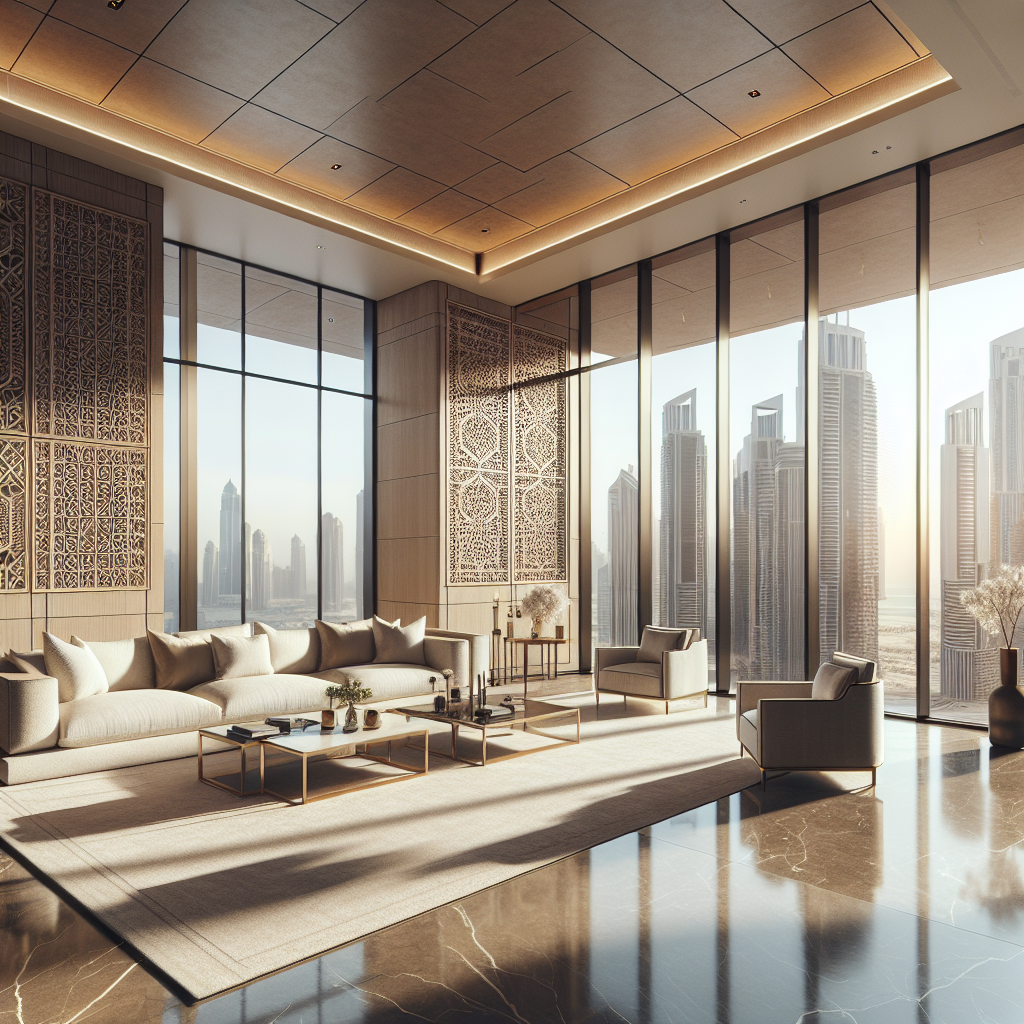
Red Flag #1: Poor Quality Flooring Materials
The first thing I do when viewing a property is look down. Flooring tells you everything about a developer’s priorities and budget allocation. In my experience, this is where corner-cutting becomes immediately apparent.
Watch out for laminate flooring in high-traffic areas or open-plan spaces. Whilst laminate has improved dramatically over the years, it simply doesn’t hold up to Dubai’s climate conditions. I recently evaluated a JBR apartment where three-year-old laminate had developed visible gaps between planks – a direct result of humidity fluctuation causing expansion and contraction.
Engineered wood is the minimum standard you should accept in luxury property design, but even then, quality varies enormously. Press your foot firmly on the floor as you walk. Does it feel hollow? Can you hear echoing or creaking? These indicate inadequate underlay or subfloor preparation – issues that will only worsen over time.
For investment interiors, I always recommend natural stone, porcelain, or high-grade engineered wood from reputable European manufacturers. Yes, it’s a higher initial investment, but these materials maintain their appearance and structural integrity for decades rather than years.
Red Flag #2: Inadequate Climate Control and Ventilation
Here’s something that catches out even experienced property investors: Dubai apartments need exceptional climate control systems, not just powerful air conditioning. I’ve seen too many properties where the AC is adequate but the overall environmental design is fundamentally flawed.
During viewings, pay attention to condensation patterns around windows and glass doors. Water droplets or fogging during the summer months indicate poor insulation and inadequate double-glazing. This isn’t just an aesthetic issue – it’s a sign that your cooling costs will be astronomical and humidity will damage furnishings, artwork, and soft materials.
Check every room for air vents and return grills. I worked on a Palm Jumeirah villa where the master bedroom had been extended without adding additional AC capacity. The result? A room that never cooled properly and developed persistent mould issues in the wardrobes. The remediation cost exceeded AED 80,000.
In bathrooms, particularly, look for proper extraction systems. Open the shower door and check inside the enclosure – any black spotting or discolouration indicates ventilation problems that will require significant investment to resolve properly.
Red Flag #3: Cheap Kitchen and Bathroom Fixtures
Kitchens and bathrooms are where Dubai property interior design investment really shows its quality – or lack thereof. These spaces experience the most intensive use and exposure to moisture, making material quality absolutely critical.
I always open every kitchen cabinet and drawer during viewings. The mechanism should be smooth, quiet, and feel substantial. Soft-close hinges and drawer runners are non-negotiable in luxury property design. If doors slam or drawers stick, you’re looking at budget hardware that will fail within a few years.
Run your hand along countertop edges and backsplashes. Quality stone should feel smooth and cool, with perfectly sealed joints. We’ve encountered numerous properties where “marble” countertops were actually composite materials already showing stress cracks and staining. True marble, granite, or engineered quartz shouldn’t show these issues even after years of use.

In bathrooms, turn on all taps fully and watch the water pressure. Inconsistent flow or sputtering indicates plumbing issues. Check grouting around tiles meticulously – discoloured, cracked, or missing grout is a red flag for water ingress and potential structural damage behind the tiles.
Red Flag #4: Poorly Executed Built-In Storage
Built-in wardrobes and storage solutions are standard in Dubai apartments, but the quality spectrum is vast. We sometimes have to completely replace built-ins in properties less than five years old because developers used inappropriate materials or poor construction methods.
Open every wardrobe and check the interior finish. Quality joinery should be finished inside and out – if you see raw MDF or chipboard, that’s a significant red flag. These materials absorb moisture and deteriorate rapidly in Dubai’s climate. We specify moisture-resistant MDF or solid wood for all our projects, with proper sealing on all surfaces.
Test the hanging rails by applying downward pressure. They should feel completely solid. I’ve seen rails pull away from walls in properties where installers used inadequate fixings or failed to locate studs properly. This seems minor until you’re facing a wardrobe full of damaged clothing and a repair bill.
Look at the shelf spacing and internal configuration. Cookie-cutter storage that doesn’t reflect how people actually live suggests a developer focused on ticking boxes rather than creating functional spaces. Quality investment interiors feature thoughtfully designed storage that maximises usability.
Red Flag #5: Substandard Lighting Design
Lighting is where I see the biggest disconnect between developer promises and actual execution. “Luxury” properties often feature minimal, poorly positioned lighting that creates dark corners and unflattering shadows throughout the space.
Count the number of light fittings in each room and note their positions. Living areas should have layered lighting – ambient, task, and accent sources that allow residents to create different moods and serve various functions. A single ceiling fixture, regardless of how expensive it looks, indicates inadequate lighting design.
Here’s what most people don’t realise: retrofit lighting improvements are expensive and disruptive. Adding new ceiling fixtures requires accessing the ceiling void, potentially affecting neighbours in multi-storey buildings, and often necessitates building management approval. We recently quoted AED 45,000 for comprehensive lighting upgrades in a Business Bay apartment – money the owner could have saved by identifying these issues before purchase.
Test all dimmer switches if present. They should operate smoothly without flickering or buzzing. Incompatible dimmer and bulb combinations suggest electrical shortcuts that could indicate broader issues with the installation.

Red Flag #6: Low-Quality Paint and Wall Finishes
Walk slowly around the property, examining walls at different angles. Quality paint application should be uniform, smooth, and free from visible brush marks, roller patterns, or colour variations. I’ve evaluated countless properties where developers applied single coats of cheap paint over poorly prepared surfaces.
Look particularly at corners, ceiling edges, and around fixtures. These areas reveal the quality of preparation and application. Uneven lines, paint on fixtures, or visible filler marks indicate rushed, low-quality workmanship that extends beyond just the decorating.
In my experience, repainting an entire Dubai apartment to proper standards costs AED 15,000-30,000, depending on size. That’s a significant unexpected expense that should factor into your offer price if you’re proceeding with a property showing these issues.
Press gently on walls in bathrooms and kitchens. Any give or soft spots could indicate moisture damage or inadequate waterproofing behind the surfaces. This is particularly common in developments completed during Dubai’s building boom, when construction quality varied dramatically.
Red Flag #7: Inappropriate Window Treatments
Windows in Dubai apartments face unique challenges – intense UV exposure, heat gain, and the need for privacy in high-density developments. The window treatments you find (or don’t find) reveal a lot about overall design quality.
Quality Dubai real estate interior design includes proper solar control. Look for integrated blinds between double-glazing, high-grade blackout curtains, or motorised external shading. Basic curtain tracks with thin fabric suggest the developer hasn’t addressed heat gain and UV damage seriously.
In a Downtown Dubai project where the owner had replaced all window treatments within eighteen months because the original curtains had literally disintegrated from sun exposure. The replacements, specified by our team, cost AED 85,000 – considerably more than the original installation but necessary for long-term performance.
Check whether window treatments are motorised and if controls are integrated with home automation systems. Manual operation might seem acceptable initially, but floor-to-ceiling windows in Dubai apartments become impractical to manage without automation, especially on high floors where external cleaning requires treatments to be raised.
Red Flag #8: Poor Space Planning and Flow
This is where my architectural training really comes into play. A property might photograph beautifully but feel awkward and cramped in person due to fundamental space planning errors. These issues significantly impact both livability and resale value.
Walk through the apartment following typical daily routines. Can you move naturally from bedroom to bathroom to kitchen? Are doorways positioned logically? I recently viewed a Dubai Marina apartment where the master bedroom door opened directly into the kitchen – a bizarre layout choice that immediately flagged poor design thinking throughout the property.

Pay attention to door swing directions and clearances. Doors that block access to switches, clash with other doors, or require furniture to be positioned awkwardly indicate space planning done on paper without considering real-world use. At Inventive Interiors Studio, we always create detailed 3D models to test circulation and furniture placement before finalising layouts.
Consider sight lines from the entrance. Quality luxury property design creates intentional views and conceals utilitarian areas like kitchens or laundry spaces from the entry perspective. If you can see directly into the kitchen from the front door, that’s a missed opportunity in terms of design sophistication.
The Hidden Cost of Interior Design Shortcuts
Let me share a recent case study that perfectly illustrates why these red flags matter financially. We were approached by an investor who’d purchased a two-bedroom apartment in a prestigious Dubai development. The marketing materials were exceptional, the show flat was stunning, and the price seemed competitive.
Within six months of handover, problems emerged. The “Italian” kitchen wasn’t actually Italian – it was a local copy using inferior materials. Cabinets were delaminating, drawer runners were failing, and the stone countertops were showing stress cracks. The bathroom grouting was disintegrating, and tiles were becoming loose. The engineered wood flooring was gapping and showing wear patterns that shouldn’t appear for years.
The total remediation cost? AED 320,000 to bring the apartment to the standard it should have been delivered at. This eliminated the investor’s anticipated returns for the first three years of ownership and significantly complicated their rental strategy during the renovation period.
Here’s the thing: these weren’t hidden defects. Every issue I’ve described was visible during the initial viewing – if you know what to look for. That’s precisely why understanding interior design red flags is crucial to protecting your Dubai property interior design investment.
Common Myths About Dubai Property Interiors
Myth 1: “All new developments use quality materials”
Absolutely not true. I’ve seen brand-new handovers with materials that won’t last five years. Developer reputation matters, but you must verify quality personally or through a professional inspection.
Myth 2: “You can easily upgrade finishes later”
Technically, yes, practically, it’s far more expensive and disruptive than most people anticipate. Retrofitting quality into a poorly finished apartment often costs 30-40% more than if those finishes had been installed initially. Plus, you’ll deal with noise restrictions, building management approvals, and potential temporary relocation.
Myth 3: “Staging reflects actual finish quality”
Show flats and staged properties are deliberately designed to distract from finish quality issues. Beautiful furniture and accessories draw attention away from cheap flooring, poor joinery, and inadequate lighting. Always look past the styling to assess actual materials and construction quality.
Myth 4: “Investment properties don’t need high-quality interiors”
This is perhaps the most expensive misconception. Properties with superior Dubai real estate interior design command 15-25% rental premiums and maintain value far better during market fluctuations. Your tenants will be comparing your property to others at similar price points – finish quality directly impacts rental income and void periods.
What to Do When You Spot Red Flags
Identifying problems is only useful if you know how to respond appropriately. Here’s my professional advice on the next steps when you encounter these interior design red flags.
First, document everything thoroughly. Take photographs and videos of specific issues. This creates a record for negotiations and, if you proceed with the purchase, establishes baseline conditions for warranty claims or developer rectification.
Second, get a professional assessment for significant concerns. At Inventive Interiors Studio, we offer pre-purchase interior design evaluations that provide detailed reports on finish quality, estimated remediation costs, and long-term maintenance implications. This typically costs AED 3,000-5,000 but can save hundreds of thousands in avoided problems or negotiating leverage.
Third, use the identified issues in price negotiations. Every red flag represents future expense or lost rental income. Quantify these costs and adjust your offer accordingly. I’ve helped clients negotiate reductions of AED 200,000-500,000 based on documented interior design deficiencies.
Finally, consider whether issues are deal-breakers or opportunities. Some problems are cosmetic and easily addressed. Others, like fundamental space planning errors or structural issues masked by finishes, should make you walk away entirely. Understanding the difference requires experience or professional guidance.
Questions to Ask During Property Viewings
Based on decades of project experience, these are the specific questions I recommend asking during viewings:
- About materials: “What specific brands and product lines were used for flooring, kitchen cabinets, bathroom fixtures, and built-in joinery?” Quality developers will provide detailed specifications. Vague answers are red flags.
- About warranties: “What warranties cover interior finishes, and what’s the claims process?” Understanding warranty coverage and developer responsiveness to defects tells you a lot about their confidence in material quality.
- About maintenance history: “For existing properties, what interior maintenance or repairs have been completed?” This reveals whether current finishes are original or have already required attention.
- About modifications: “Have any interior modifications been made, and were they approved by building management?” Unauthorised changes can create liability issues and often indicate poor-quality workmanship.
The Investment Perspective: Interior Design and Property Value
Let’s talk numbers, because ultimately, Dubai property interior design investment decisions should be financially rational. Properties with superior interior design and finishes appreciate 8-12% faster than comparable units with standard specifications, according to our analysis of Dubai Marina and Downtown transactions over the past five years.
Rental yields tell a similar story. A two-bedroom apartment with quality investment interiors in Dubai Marina commands AED 120,000-140,000 annually, whilst comparable units with builder-grade finishes achieve AED 95,000-110,000. That’s a 20-25% premium directly attributable to interior quality.
Void periods are equally significant. Quality properties rent faster and retain tenants longer. We’ve tracked properties we’ve designed or specified, and they average 2-3 weeks void between tenancies compared to 6-8 weeks for standard units in the same developments. Over a ten-year investment horizon, this difference amounts to nearly a full year of additional rental income.
Resale is where superior interiors really prove their value. Properties that show well and require no immediate work sell faster and achieve the asking price or above. Units needing renovation sell at 10-15% discounts and take 40-60% longer to transact. Time on market costs money in holding costs, opportunity costs, and often necessitates price reductions.
See also: Dubai property investment strategies
Final Thoughts: Protecting Your Investment
After twenty years of designing luxury property interiors across Dubai, I’ve learned that the most successful property investors are those who look beyond marketing materials and surface aesthetics. They understand that interior design quality directly impacts financial returns, lifestyle quality, and long-term value preservation.
The red flags I’ve outlined aren’t theoretical concerns – they’re real issues I encounter regularly in Dubai’s property market. Some properties are genuinely exceptional, built to international standards with materials and craftsmanship that will last decades. Others look impressive initially but reveal their shortcomings within months of occupation.
Your Dubai property interior design investment deserves the same rigorous evaluation you’d apply to location, developer reputation, and price per square foot. Don’t let time pressure, emotional attachment, or persuasive marketing override careful assessment of interior design quality.
If you’re serious about making informed property decisions in Dubai’s competitive market, professional guidance makes all the difference. I’ve helped dozens of clients avoid costly mistakes and identify genuinely exceptional properties that deliver both immediate satisfaction and long-term value.
Whether you’re buying your first Dubai property or adding to an extensive portfolio, understanding interior design red flags protects your investment and ensures you’re getting genuine value for your money. The apartment that looks perfect might be hiding expensive problems – or it might be the rare gem that exceeds expectations for years to come. Knowing the difference is what separates successful property investors from those who learn expensive lessons.
Take your time, ask questions, look beyond the staging, and never hesitate to seek professional assessment when significant money is at stake. Your future self will thank you for the diligence.




 Polski
  English (UK)