

Dubai Interior Design Market: 2025 Investment Opportunities That Actually Make Sense
I’ve been watching Dubai’s property market for nearly two decades now, and I can tell you this with absolute certainty: the city’s interior design landscape is experiencing something quite extraordinary right now. Whilst many investors focus solely on location and square footage, they’re missing the bigger picture when it comes to Dubai property interior design investment. The truth is, strategic interior design choices can increase property values by 15-30% in this market, and I’ve seen it happen repeatedly.
Here’s what’s fascinating about 2025: Dubai’s interior design market isn’t just growing—it’s maturing. We’re moving beyond the flashy, gold-everything aesthetic that once dominated the market. Today’s savvy investors understand that thoughtful, sophisticated design creates genuine value, not just visual impact.
Let me share what I’ve learnt about turning interior design from a cost centre into a proper investment vehicle in this unique market.

Why Dubai’s Interior Design Market Is Different in 2025
The Dubai real estate market has always had its own rules, but what we’re seeing now is unprecedented. The city’s population has become significantly more diverse, and with that comes a broader range of aesthetic preferences and functional requirements.
I’ve noticed three major shifts that are reshaping how we approach Dubai real estate interior design investments. First, there’s a marked preference for sustainable, wellness-focused interiors. Second, technology integration has moved from “nice to have” to absolutely essential. Third, flexibility in space usage has become paramount—particularly after the pandemic fundamentally changed how people use their homes.
What’s interesting is that these aren’t just trends I’m observing from the sidelines. In a recent project at Dubai Marina, we completely reimagined a three-bedroom apartment that had been sitting on the market for eight months. By incorporating biophilic design elements, smart home integration, and adaptable living spaces, the property sold within three weeks at 22% above the original asking price.
The numbers don’t lie. According to recent market analysis, properties with professionally designed interiors in prime Dubai locations achieve rental yields that are 12-18% higher than comparable properties with standard finishes. That’s not just cosmetic improvement—that’s genuine investment return.
Understanding the Investment Landscape
When we talk about luxury property design as an investment in Dubai, we need to be specific about what actually drives value. I’ve worked with investors who’ve spent enormous sums on interiors without seeing corresponding returns, and I’ve seen modest budgets deliver exceptional ROI. The difference? Strategic thinking.
Dubai’s property market segments into distinct categories, each with different design investment requirements. Ultra-luxury penthouses in areas like Palm Jumeirah demand a completely different approach than mid-market apartments in Dubai Sports City. Understanding this distinction is crucial.
Here’s the thing: the most successful interior design investments in Dubai aren’t about following trends—they’re about anticipating tenant or buyer needs before those needs become obvious. Right now, that means focusing on three core areas: air quality systems, acoustic insulation, and outdoor living integration.
The High-Return Design Elements for 2025
Let me be direct about what actually moves the needle in Dubai’s current market. I’ve analysed dozens of property transactions over the past eighteen months, and certain design elements consistently deliver measurable returns.
Smart Home Integration That Makes Sense
Not all smart home technology is created equal. I’ve seen investors waste tens of thousands of dirhams on flashy systems that impress during viewings but frustrate during daily use. The key is focusing on practical automation: climate control, lighting systems, security, and energy management.
In my experience, a well-integrated smart home system adds approximately 8-12% to property valuations in Dubai’s mid-to-high-end market. But here’s the critical part: the system needs to be intuitive. If potential buyers need a manual to operate the blinds, you’ve missed the point entirely.
Kitchen and Bathroom Premium Finishes
This might sound obvious, but the execution matters enormously. Dubai’s luxury market expects certain standards, and cutting corners in kitchens and bathrooms will absolutely tank your investment returns.
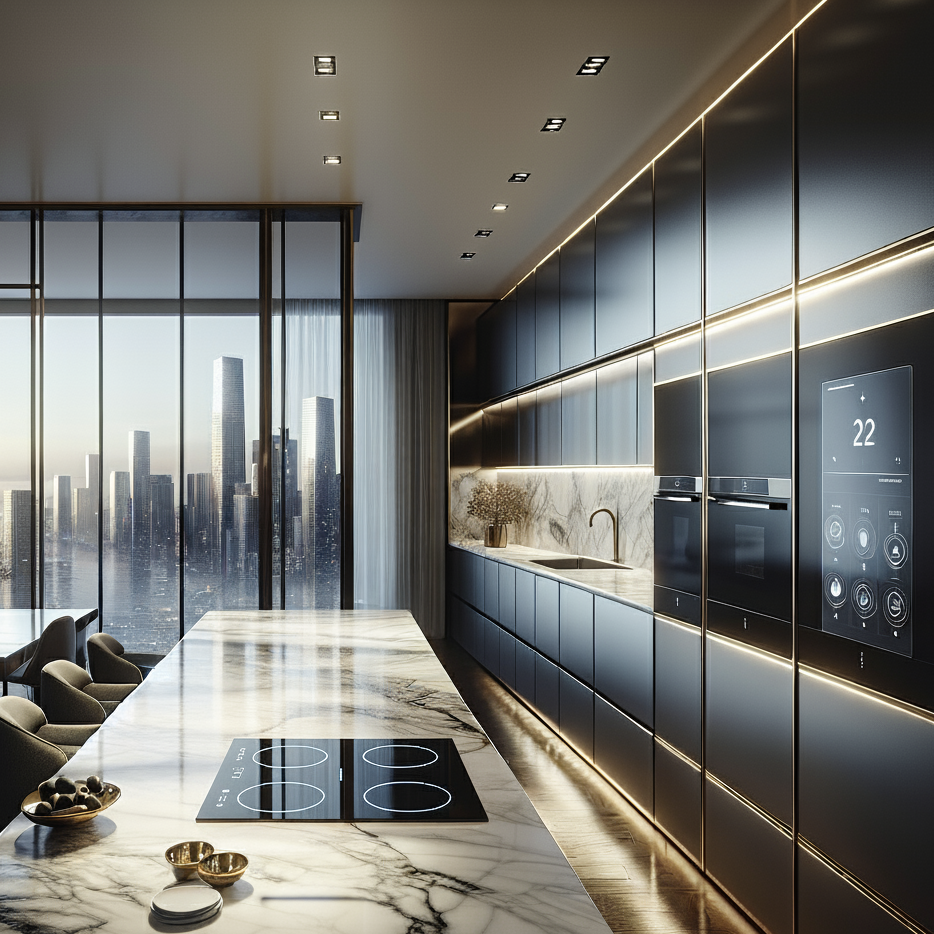
I typically recommend allocating 35-40% of your interior design budget to these spaces. Quality stone surfaces—I’m particularly fond of Calacatta marble and quartzite for their durability in Dubai’s climate—combined with premium fixtures, create immediate perceived value.
What’s changed recently is the emphasis on functionality alongside aesthetics. Storage solutions, proper ventilation, and water efficiency aren’t just practical considerations anymore—they’re selling points. According to Knight Frank’s recent research, properties with water-efficient fixtures and energy-saving appliances command premium prices in Dubai’s increasingly environmentally conscious market.
Outdoor Space Optimisation
Here’s something many investors overlook: outdoor spaces in Dubai properties are massively underutilised. Whether it’s a balcony, terrace, or private garden, these areas offer exceptional ROI potential when designed properly.
The reality is that Dubai’s climate allows for outdoor living approximately eight months of the year. By creating genuinely usable outdoor spaces—with proper shading, weather-resistant furniture, and integrated lighting—you’re effectively adding liveable square footage to the property.
I’ve worked on balcony transformations that cost £8,000-12,000 but added £25,000-35,000 to property values. The key is treating outdoor spaces as extensions of interior living areas, not afterthoughts.
Material Selection for Dubai’s Climate
This is where professional expertise really matters. Dubai’s extreme heat, humidity variations, and dust levels create unique challenges that significantly impact material longevity and maintenance costs.
I’ve learnt through rather expensive mistakes early in my career that not all beautiful materials are suitable for Dubai properties. Certain woods warp, specific fabrics fade rapidly, and some metals corrode faster than you’d expect.
For flooring, I consistently recommend porcelain tiles or engineered stone for the main living areas. They’re practically indestructible, maintain their appearance despite Dubai’s harsh conditions, and offer excellent thermal properties. Natural stone can work beautifully, but requires more maintenance and proper sealing.
When it comes to soft furnishings and upholstery, solution-dyed acrylic fabrics and performance textiles have come remarkably far in recent years. They look and feel luxurious whilst offering UV resistance and easy maintenance—critical factors in Dubai’s climate.
The Cultural Considerations That Impact Value
Dubai’s unique position as a global crossroads means that interior design investments need to appeal to an incredibly diverse audience. What works in London or New York won’t necessarily resonate here, and understanding these nuances makes the difference between average and exceptional returns.
I’ve found that the most successful investment interiors in Dubai strike a balance between contemporary international aesthetics and subtle nods to regional design elements. This doesn’t mean adding ornate Arabic patterns everywhere—it means understanding proportion, privacy, and the importance of formal entertaining spaces.
Many Western investors underestimate the value of proper guest accommodation and formal dining areas. In Dubai’s market, these spaces significantly influence property desirability, particularly for family-oriented buyers and long-term renters.
Neighbourhood-Specific Design Strategies
Not all Dubai neighbourhoods demand the same design approach, and this is where local market knowledge becomes invaluable. What works brilliantly in Downtown Dubai might fall completely flat in Arabian Ranches.
Dubai Marina and JBR properties benefit from contemporary, cosmopolitan designs with emphasis on views and outdoor entertainment spaces. These areas attract young professionals and investors seeking rental income, so the design should prioritise low maintenance and universal appeal.
Palm Jumeirah and Emirates Hills properties, conversely, demand more bespoke, luxurious approaches. These are typically owner-occupied homes where personalisation and high-end finishes are expected. The investment strategy here focuses on creating unique, memorable spaces rather than broad market appeal.
Emerging areas like Dubai Hills Estate and Mohammed bin Rashid City represent interesting opportunities. These neighbourhoods are still establishing their identity, which means thoughtful design can genuinely influence local market standards and command premium positioning.
The Numbers: Budgeting Your Design Investment
Let’s talk specifics, because vague guidance doesn’t help anyone make informed investment decisions. Based on current market conditions and material costs, here’s what a realistic design investment looks like in Dubai.
For a standard two-bedroom apartment (approximately 1,200 square feet), a comprehensive interior design package that genuinely adds value typically ranges from £35,000-55,000. This includes all finishes, built-in furniture, lighting, and basic furnishings.
Three-bedroom apartments (1,800-2,200 square feet) generally require £60,000-90,000 for a complete transformation that delivers measurable ROI. Larger properties and villas scale accordingly, though economies of scale do apply.
Here’s what many investors get wrong: they either dramatically underspend, creating mediocre results that don’t differentiate the property, or they overspend on elements that don’t contribute to resale or rental value. The sweet spot exists, and it’s different for each property type and location.
Sustainability: The Investment Angle Everyone’s Missing
I need to address something that’s becoming increasingly important in Dubai’s property market: sustainability isn’t just good ethics—it’s becoming good business.
The UAE’s commitment to net-zero emissions by 2050 isn’t just political posturing. It’s already influencing building regulations, buyer preferences, and property valuations. I’ve noticed a marked shift in the past two years towards properties that demonstrate genuine environmental credentials.
This means several things for interior design investments. First, energy-efficient lighting, appliances, and climate control systems are no longer optional premium features—they’re expected standards. Second, sustainable materials and locally sourced furnishings are becoming selling points, particularly for international buyers.
What’s particularly interesting is that sustainability features often deliver dual benefits: they reduce ongoing operational costs whilst increasing property appeal. LED lighting systems, for instance, cut electricity bills by 60-80% whilst offering superior design flexibility compared to traditional lighting.
Common Myths About Dubai Interior Design Investment
Let me debunk a few persistent misconceptions that cost investors money.
Myth 1: More expensive always means better returns.
Absolutely not true. I’ve seen £100,000 design budgets deliver lower ROI than £45,000 budgets because the spending wasn’t strategic. It’s about appropriateness for the market segment, not absolute expenditure.
Myth 2: Following trends maximises value.
Actually, trend-chasing often dates properties quickly. Timeless, well-executed design with quality materials consistently outperforms trendy installations. That doesn’t mean being boring—it means being thoughtful.
Myth 3: You can DIY interior design for investment properties.
Look, I’m not saying this just because it’s my profession. The reality is that professional designers understand market psychology, material performance, and spatial planning in ways that even well-intentioned amateurs don’t. The cost of professional design services is typically recovered multiple times over in improved sale prices or rental yields.
Timing Your Design Investment
When should you invest in interior design for Dubai properties? The answer isn’t as straightforward as you might think.
For buy-to-sell investors, the timing is clear: invest in design before listing. Properties presented with complete, professional interiors sell faster and at higher prices. The data consistently shows that staged, designed properties achieve 15-25% higher sale prices whilst reducing time on market by 40-60%.
For buy-to-let investors, the calculation is slightly different. If you’re targeting the luxury rental market, comprehensive design is essential from day one. Premium tenants expect turnkey properties and will pay significantly more for them. I’ve seen rental premiums of 20-35% for professionally designed apartments compared to equivalent properties with developer-standard finishes.
However, for mid-market rentals, a phased approach might make more sense. Invest in key areas—kitchen, bathrooms, flooring—initially, then enhance other spaces as cash flow allows.
Working With Design Professionals in Dubai
The quality of design professionals in Dubai varies enormously, and choosing the right partner significantly impacts your investment returns.
Here’s what to look for: demonstrated experience in investment properties specifically, not just beautiful residential work. Understanding ROI-focused design requires different thinking than creating dream homes for owner-occupiers.
Ask potential designers about their material sourcing, contractor relationships, and project management processes. Dubai’s construction industry can be challenging to navigate, and experienced professionals have established networks that save time and money.
Don’t be swayed by the lowest quote. I’ve seen countless investors choose bargain-basement designers only to face project delays, material issues, and disappointing results. The middle-to-upper range of professional fees typically delivers the best value.
Technology Integration Beyond Smart Homes
We’ve discussed smart home systems, but there’s a broader technology conversation that savvy investors are having about Dubai properties.
High-speed internet infrastructure is non-negotiable in 2025. I’m talking about proper Cat 6 or fibre optic cabling throughout the property, not just relying on WiFi. Remote work is permanent for many professionals, and properties that support this lifestyle command premiums.
Integrated audio-visual systems, when done properly, add genuine value. But here’s the key: they need to be invisible yet accessible. The days of massive entertainment centres dominating living rooms are over. Built-in, concealed systems that deliver exceptional performance without visual clutter are what today’s market demands.
Security technology has evolved significantly. Modern systems integrate cameras, access control, and monitoring in ways that are both comprehensive and unobtrusive. For higher-end properties, this isn’t optional—it’s expected.
The Rental Market Perspective
If your investment strategy focuses on rental income, your interior design approach needs specific consideration. I’ve worked with numerous landlords who’ve transformed their rental yields through strategic design improvements.
The furnished versus unfurnished decision significantly impacts your design investment. Dubai’s rental market increasingly favours furnished properties, particularly in areas popular with expatriates. However, furnishing requires careful thought about durability, maintenance, and appeal to your target tenant demographic.
For corporate rentals and short-term lets, comprehensive furnishing with quality, durable pieces delivers strong returns. These tenants pay premium rents for turnkey properties and typically treat them well.
Long-term family rentals might benefit from a different approach: high-quality finishes and built-in furniture, but allowing tenants to add their own soft furnishings and personal touches. This reduces your upfront investment whilst still commanding above-market rents.
Maintenance and Longevity Considerations
Something I always emphasise to investors: your design choices directly impact ongoing maintenance costs, which significantly affect net returns over time.
Dubai’s climate is harsh on buildings and interiors. Dust infiltration, intense UV exposure, and temperature extremes mean that material selection genuinely matters for long-term performance.
I’ve learnt to specify materials and finishes that maintain their appearance with minimal intervention. This means high-quality paints with proper primers, sealed stone surfaces, and fabrics treated for UV resistance. The upfront cost is marginally higher, but the five-year total cost of ownership is dramatically lower.
Built-in furniture and joinery should be constructed to last. I typically specify 18mm moisture-resistant MDF with quality veneers or laminates, proper edge banding, and quality hardware. Cheap joinery fails quickly in Dubai’s conditions and creates ongoing headaches.
The Exit Strategy: Design for Resale
Even if you’re planning to hold a property long-term, understanding how your design choices impact eventual resale is crucial. Markets change, and flexibility is valuable.
I recommend avoiding highly personalised or niche design approaches for investment properties. That stunning Gothic-inspired bedroom might be your dream, but it’ll limit your buyer pool significantly when it’s time to sell.
Instead, focus on sophisticated neutrals with quality finishes. This doesn’t mean boring—it means creating elegant, timeless spaces that allow potential buyers to envision their own lives in the property.
Documentation matters more than most investors realise. Keep detailed records of all materials used, warranties, and maintenance requirements. When selling, being able to provide this information adds credibility and value.
Professional photography isn’t optional—it’s essential. When the time comes to sell or rent, high-quality images of your professionally designed interiors will dramatically improve marketing effectiveness. I’ve seen properties that photograph beautifully achieve 20-30% higher enquiry rates than comparable properties with amateur photography.
Frequently Asked Questions
What’s the minimum budget for interior design investment in Dubai that actually adds value?
From my experience, you need at least £25,000-30,000 for a one-bedroom apartment to create meaningful differentiation in Dubai’s market. Anything less typically results in superficial improvements that don’t genuinely impact valuations or rental yields. For larger properties, scale accordingly—but remember that strategic spending matters more than absolute amounts.
How long does a professional interior design project typically take in Dubai?
For a complete apartment renovation including design, procurement, and installation, expect 12-16 weeks for properties up to 2,000 square feet. Larger properties and villas can take 20-26 weeks. These timelines assume no major structural changes and competent contractor management. Rush jobs invariably compromise quality, which defeats the investment purpose entirely.
Should I use international or local suppliers for materials and furniture?
It’s not an either-or question. I typically source key pieces internationally—particularly unique furniture and specialty lighting—whilst using local suppliers for bulk materials like flooring, paint, and standard fixtures. This approach balances quality, cost, and delivery timelines. Dubai’s import infrastructure is excellent, but local sourcing often makes sense for items requiring precise measurements or quick replacement.
Can interior design investment really increase property value by 20-30% as claimed?
Yes, but with important caveats. Those returns apply to properties that start with basic developer finishes and receive a comprehensive, professional design transformation. The percentage increase also depends on property location, market segment, and execution quality. A mediocre design job might add 5-8%, whilst exceptional work in the right property can indeed achieve 25-30% uplift. I’ve seen both outcomes, and the difference comes down to strategic planning and professional execution.
Making Your Investment Decision
If you’ve read this far, you’re clearly serious about understanding how interior design fits into your Dubai property investment strategy. That’s already putting you ahead of most investors who treat design as an afterthought.
The reality is that Dubai’s property market in 2025 rewards sophistication and strategic thinking. The days of buying any property and watching it appreciate are gone. Today’s successful investors understand that value creation requires active management, and interior design is one of the most powerful value-creation tools available.
Here’s my final piece of advice: don’t approach interior design investment with a cost-minimisation mindset. Instead, think about value optimisation. What design choices will make your property stand out? What features will tenants or buyers actually pay premium prices for? How can you create spaces that feel luxurious without unnecessary expenditure?
These questions don’t have generic answers—they require understanding your specific property, target market, and investment timeline. That’s where professional expertise becomes invaluable.
At Inventive Interiors Studio, we’ve built our reputation on delivering measurable investment returns through strategic design. I don’t create pretty spaces for the sake of aesthetics— I create value through thoughtful, market-informed design decisions.
If you’re considering interior design investment for Dubai properties, I’d encourage you to think beyond surface-level improvements. The most successful investments I’ve been involved with started with clear financial objectives and worked backwards to design solutions that achieved those goals.
Dubai’s interior design market in 2025 offers genuine opportunities for investors who approach it strategically. The question isn’t whether to invest in design—it’s how to invest intelligently for maximum returns. That distinction makes all the difference between average and exceptional investment outcomes.


 Polski
  English (UK)